Today I have the great pleasure of presenting a guest post by one of my favorite authors, Harry Connolly. Harry is the author of The Twenty Palaces series from Del Rey Books, and is currently on a blog tour to promote his new, self-published trilogy called “The Great Way”: The Way into Chaos, The Way into Magic, and The Way into Darkness. Since my blog is mostly about television and TV reviews, he decided to write a post about (one of my favorite current shows) Arrow.
Enjoy!
______________________________________________________________
King Queen and his Three Seasons: ARROW and the Challenges of Ongoing Narrative
Like a lot of TV shows, ARROW stumbled out of the gate, but then it found its footing, and became something amazing. For about a year. My interest began to wane throughout the second season, and, as the third season winds down, I find myself barely invested.
Why? What happened in this long-running narrative that has squelched my enthusiasm? As a novelist about to start a new series, this question looms large in my mind.
When season one of ARROW first aired, I didn’t bother with it. Archers are undeniably cool, yes, but I had no love for the ridiculous aging hippie of the comics or his trick arrows. At some point, I turned on the show mid-episode and saw a scene where a gangster flunky got himself strung up and interrogated. There was no dumb pointy mustache, which was good, but nothing else about tough-talking Robin Hood seemed remotely appealing.
But people kept talking it up, and they were excited about season two. When S1 appeared on Netflix I tried again from the start.
I was immediately hooked.
The first few episodes were rough, but I expected that. What I didn’t expect was that Oliver Queen would be such a compelling figure. For the uninitiated: Queen was an irresponsible playboy and heir to billions who was shipwrecked and believed dead for five years. When he was found, he’d become a muscle-bound emotional wreck with scars all over his body. One of the first scenes in the pilot showed him standing at a window, scars on display, with a doctor whispering to his mother than the man they rescued might not be the son she remembered. I loved it.
So, how did it turn so dull?
Well, it’s not just that they have stopped including shirtless workout scenes. (My wife insisted I mention that.) I think the real answer comes from three things: the character, the structure of the first season, and the limits the producers put on the premise.
I want to take those in reverse order. The first thing that really worked for season one was that the show was not about a vigilante who decided to “fight crime.” He wasn’t a billionaire who dressed in a disguise so he could anonymously beat up poor people who broke the law.
Instead, he had a list of names given to him by his father (they were on the shipwrecked yacht together) and to honor his father’s last request, he worked to dismantle the corrupt organization the list represented. The stories were limited and focussed, and the names on the list were almost always other rich people. What’s more, Oliver did his best to hide the truth from his family to protect them, himself, and his father’s memory. The show broke from this format once or twice, but not often, and it worked.
Unfortunately, that’s all out the window now. Almost every character on the show knows Oliver Queen is the Arrow, and the season-long arc deals mostly with the fallout of the fridging of his girlfriend, a fellow vigilante. Sure, this allows for big drama as the supposed threat of Ra’s al Ghul comes closer, but it’s not terribly original.
The structure: during season one, every character who was tied into the finale was right there in the first episode, and they were featured players all season long. They also kept secrets from each other, and pried into each other’s lives, and were held together by the crucible of family and/or a desire to resume their old lives with Oliver (however impossible that seemed).
In season three, the inter-character conflicts mainly center around who’s allowed to fight, who gets to make decisions, and who can be trusted as part of the team. And the big threat of Ra’s al Ghul has been largely off screen all season. Not that there haven’t been dramatic moments (the fall finale was pretty excellent) but the whole thing has felt diffuse and flat.
Finally, and most importantly, the character. Season one Oliver Queen was a screwed up guy. He’d been tortured. He’d seen and done terrible things. He was haunted. Midway through the pilot, he straight up broke a guy’s neck, saying “No one can know my secret.”
In season three? He’s a costumed crime fighter of the trained, dark variety. He’s got a whole squad of people helping him, and there isn’t even much archery. It’s just punching guys with a bow in his hand. They don’t even show the obsessive workout scenes anymore. In short, he’s lost the edge that made him interesting.
Most long-running narratives change over time. VERONICA MARS could never recapture the power of that first season murder of Lilly Kane. MOONLIGHTING could not sustain the romantic tension between the leads. Whenever the crew in FARSCAPE came to terms with each other, they had to introduce a new supporting character or two who upset the balance.
This is the challenge: Characters grow and come to terms with their situation. Hostilities become resolved; if they aren’t resolved, they stretch out too long and lose tension. New conflicts need to be introduced, and they can’t just be the equal of the old ones. They need to be even better: deeper, more interesting, more screwed up.
THE X-FILES managed this for a little while. Mulder’s search for his sister, abducted by aliens, took him deeper and deeper into the rabbit hole. It worked very well for a surprisingly long time.
Other shows shows are structured so they don’t have to bother with inter-character conflict. LAW & ORDER hinges its character conflict outward, towards that episodes guest stars. Personally, I think that’s a bit dull.
The solution for me, and for a lot of shows, it seems, is to learn from the soap operas of afternoons past: not in their style, pacing, or tone, but in their plot structures. While soap opera characters change and grow, their goals don’t necessarily align with other characters when they resolve a particular conflict. They may reconcile on one subject, but there’s always a new temptation, secret, or something to keep the drama going.
Obviously, we don’t want the naked melodrama, or every-character-has-a-conversation-about-this-problem pacing, but a narrative where every resolution creates new conflict? That’s something I could get excited about.
Speaking of long narratives…
While it’s not as long as a multi-season television show, an epic fantasy trilogy is another example of an extended conflict with sweep and multiple irreconcilable conflicts. And I just happen to have written one.
Book one received a starred review from Publishers Weekly. Check out the cover:
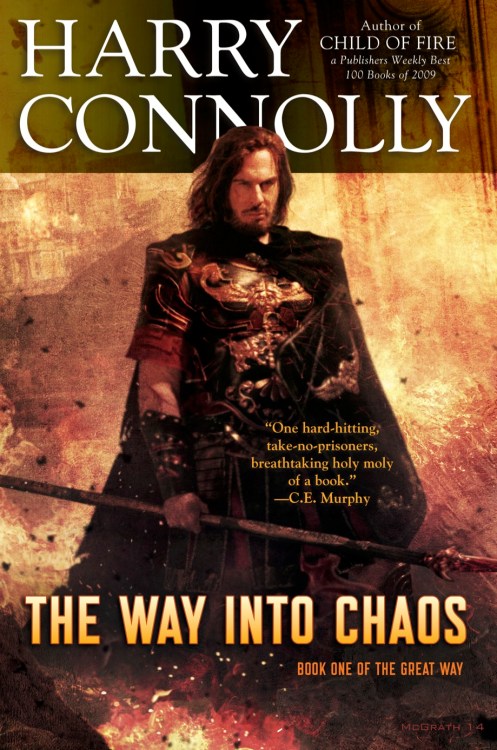
It’s about a sentient curse that brings about the collapse of an empire. You can find out more about that first book here, or you can read the sample chapters I’ve posted on my blog.
Thanks for your time.
BIO: Harry Connolly’s debut novel, Child Of Fire, was named to Publishers Weekly’s Best 100 Novels of 2009. For his epic fantasy series The Great Way, he turned to Kickstarter; at the time this was written, it’s the ninth-most-funded Fiction campaign ever. Book one of The Great Way, The Way Into Chaos was published in December, 2014. Book two, The Way Into Magic, was published in January, 2015. The third and final book, The Way Into Darkness, was released on February 3rd, 2015. Harry lives in Seattle with his beloved wife, beloved son, and beloved library system.
Posted in books, TV, writing
Tags: Arrow, harry connolly, television, The Great Way, The Way Into Chaos, The Way Into Darkness, The Way Into Magic, TV, twenty palaces, writing

 I was disappointed when Harry Connolly’s Twenty Palaces series was discontinued, and I was shocked to find out that he couldn’t find a publisher for his new epic fantasy trilogy, The Great Way. He’s such an engaging writer and receives such glowing reviews, it was hard to believe they weren’t all competing for it. So Connolly turned to Kickstarter to self-publish the series, and it became one of the top projects ever in its category–so much so, that he was able to offer several extra incentives beyond the original ones.
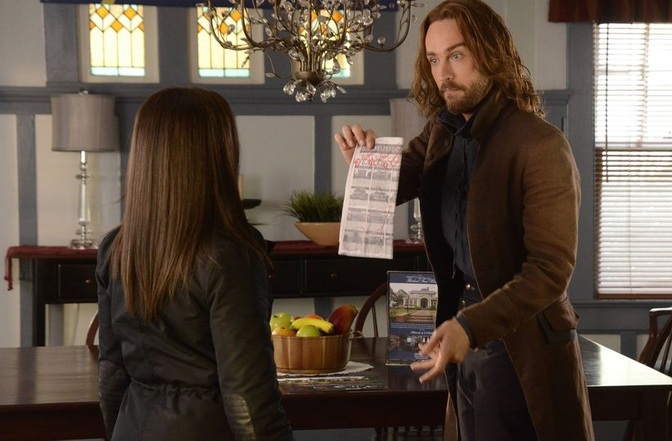



 Author Christopher J. Valin